Attic ventilation that fixes hot attics, ice dams and dead shingles
A Meridian attic hits 140°F in July and grows frost in January. Both cook shingles from below and both are the same problem: not enough air moving through. Balanced ridge and soffit venting fixes it for less than a roof.

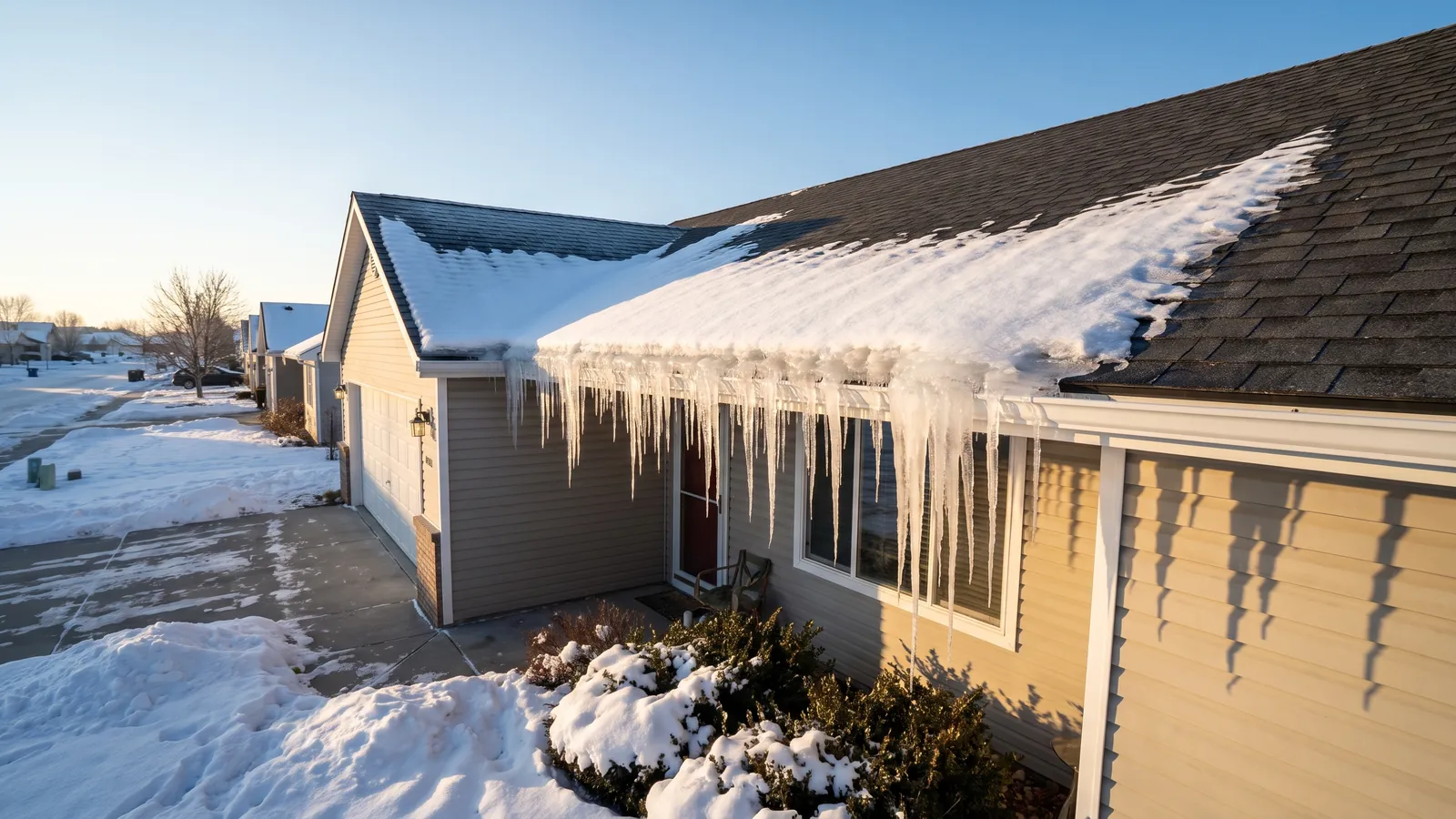
Look at the roof of a 2005 Meridian house and count the vents. Usually you'll find a few box vents near the ridge, maybe a gable vent, and soffit vents that were stuffed shut with blown-in insulation the day the house was finished. That attic has almost no airflow. In July it hits 140°F, bakes the underside of the shingles and adds a hundred dollars to the cooling bill. In January the warm, moist air from the house — and from every bathroom fan that vents 'toward the soffit' instead of outside — hits the cold deck and condenses, frost forms on the nails, and it rains inside the attic on the first warm afternoon. That same trapped heat melts the snow on the roof and refreezes it at the eaves: the ice dam.
The fix is balance: continuous soffit intake at the eaves (with baffles so the insulation can't block it), a continuous ridge vent at the peak, and nothing else — no gable vents or box vents short-circuiting the flow. The code minimum is 1 square foot of net free vent area per 150 square feet of attic, split evenly between intake and exhaust; on a 2,000 square-foot single-story that's about 7 square feet each way, and most Meridian attics have a third of that. We also re-route bathroom and dryer vents to terminate outside, add baffles, and check that the insulation is at the R-49 the 2018 energy code calls for in climate zone 5B.
What's included
Ridge vent
Continuous, shingle-over ridge vent along the full peak, replacing box and gable vents that short-circuit the flow.
Soffit intake & baffles
Continuous or panel soffit vents with foam baffles so insulation can't block them.
Ventilation math
Net free area calculated for your attic, split between intake and exhaust, in writing.
Bath & dryer fan re-routing
Fans ducted outside through a proper roof or wall cap — not into the attic or 'toward the soffit.'
Insulation check
Depth measured against the R-49 zone 5B standard; blocked vents cleared.
Ice-dam prevention
Ventilation plus air-sealing plus ice barrier at the eaves — the three-part fix.
Attic ventilation cost in Meridian, ID
| Job | Typical price | Notes |
|---|---|---|
| Ridge vent installation, per linear foot | $14 – $24 | Includes cutting the slot and shingle-over vent |
| Soffit vent installation, per vent | $45 – $90 | Or per foot for continuous |
| Insulation baffles, per rafter bay | $8 – $15 | Installed from the attic |
| Bathroom fan vent re-route to roof cap | $275 – $550 | Per fan |
| Full ventilation balance, typical home | $1,400 – $3,200 | Ridge, soffits, baffles, fan re-routes |
| Attic assessment with photos | $0 | With any roof inspection |
These are 2026 Treasure Valley ranges so you can budget. Your written price is itemized — tear-off, decking, underlayment, ice barrier, flashing, vents, disposal, permit — and good for 30 days.
Recent work
Questions we get about attic ventilation
Will better ventilation lower my cooling bill?
Some. A vented attic runs 20–40°F cooler on a July afternoon, which means the ducts and the ceiling are cooler and the AC runs less. The bigger win is shingle life — five to ten years — and no more ice dams.
Do I need a powered attic fan?
Almost never. A powered fan on an attic with weak soffit intake pulls conditioned air out of the house through every ceiling gap. Balanced passive venting moves more air for free.
Can you add a ridge vent to my existing roof?
Yes. We cut the slot along the ridge, install the vent and re-cap it in matching shingles. It's a half-day job on most Meridian homes.
Why does my attic have frost on the nails?
Warm, humid indoor air is reaching the cold deck — usually from a bathroom fan venting into the attic, a leaky attic hatch or can lights, and not enough exhaust to carry it out. We find the sources, seal them and balance the venting.
Is the R-49 insulation required?
For new construction and additions under Meridian's 2018 energy code in climate zone 5B, yes. You aren't required to upgrade an existing attic, but going from the R-30 most 2005 homes have to R-49 pays back quickly here.