Fixing leaks in Meridian, starting from the attic
The spot on your ceiling is rarely right under the hole. We follow the water back from inside the attic, repair whatever's really causing it, and send you pictures of both. Most of the time you're looking at a few hundred dollars, not a whole new roof.
Why we start underneath
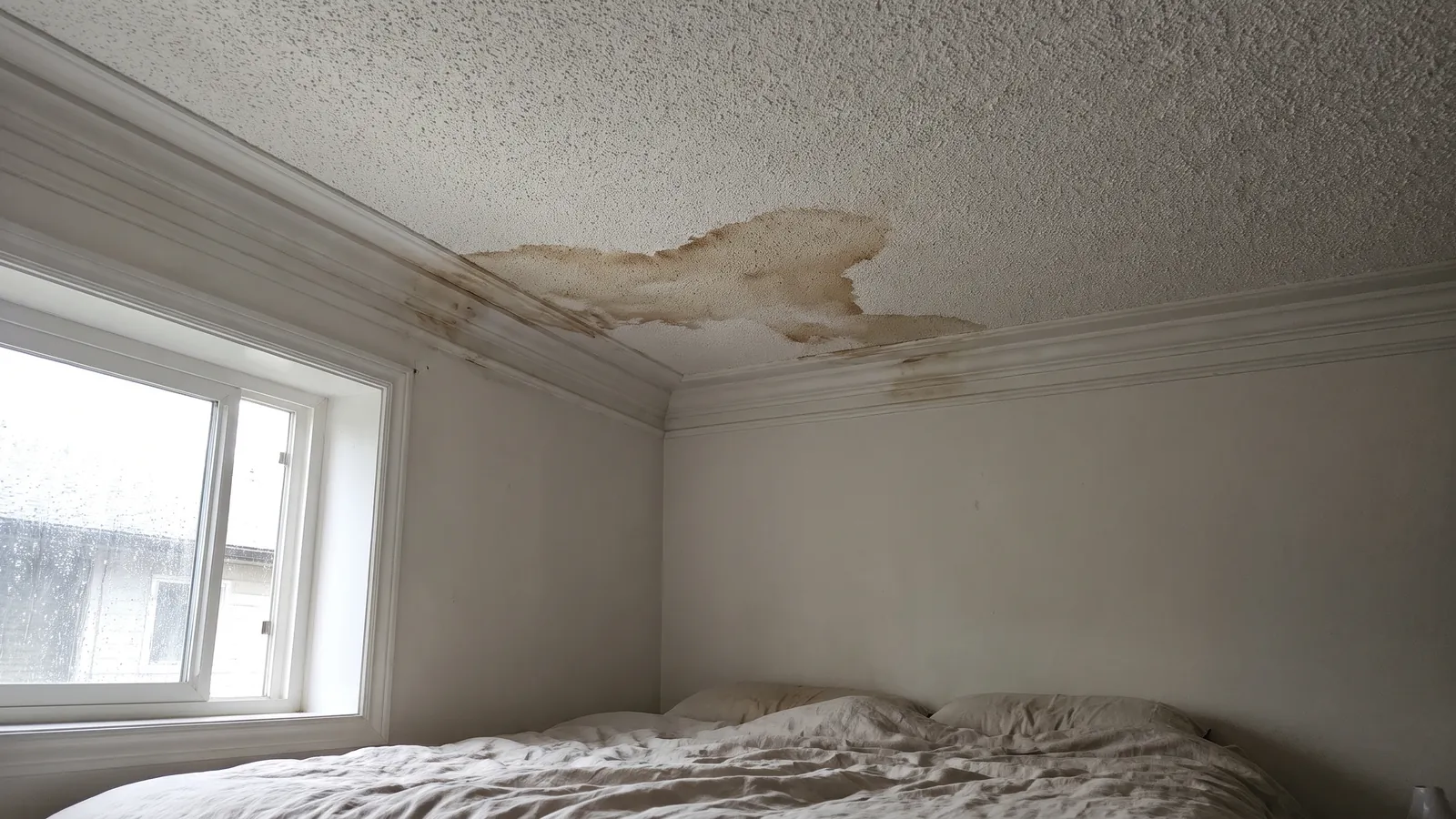
Water doesn't fall straight down when it gets in. It creeps along the bottom of the decking first, so that brown ring you're staring at could be anywhere from two to fifteen feet away from where the water actually got in. That's the reason we head up into your attic with a flashlight before anybody climbs the roof with a caulk gun. From underneath, your roof gives itself away: a pinhole of daylight through the deck, a darkened rafter, a nail tip that's gone rusty, a damp patch in the blown-in insulation. It's especially helpful on the busy two-story roofs over in Paramount and Tuscany, with all their dormers, bump-outs and second-story walls, and on the long, low ranch houses near Cherry Lane. Looking from inside takes most of the guesswork out.
The usual suspects
Once you've been inside enough attics around Meridian, you notice the same few culprits again and again. Pipe boots crack. Somebody before us smeared caulk over step flashing when it needed replacing. Decking shifts through the 90-degree swing from January to July and pushes nails up. Three-tab shingles on slopes that face west and south get creased by the wind. North eaves put on without any ice barrier let ice dams back water underneath. And a hail bruise from a storm two summers back finally splits open. Every one of those has a real fix, and a tube of sealant isn't it for any of them.
What's included
We look from the attic first
Before we set foot on your roof, we follow the water's path from inside, so the fix lands right where the leak really is.
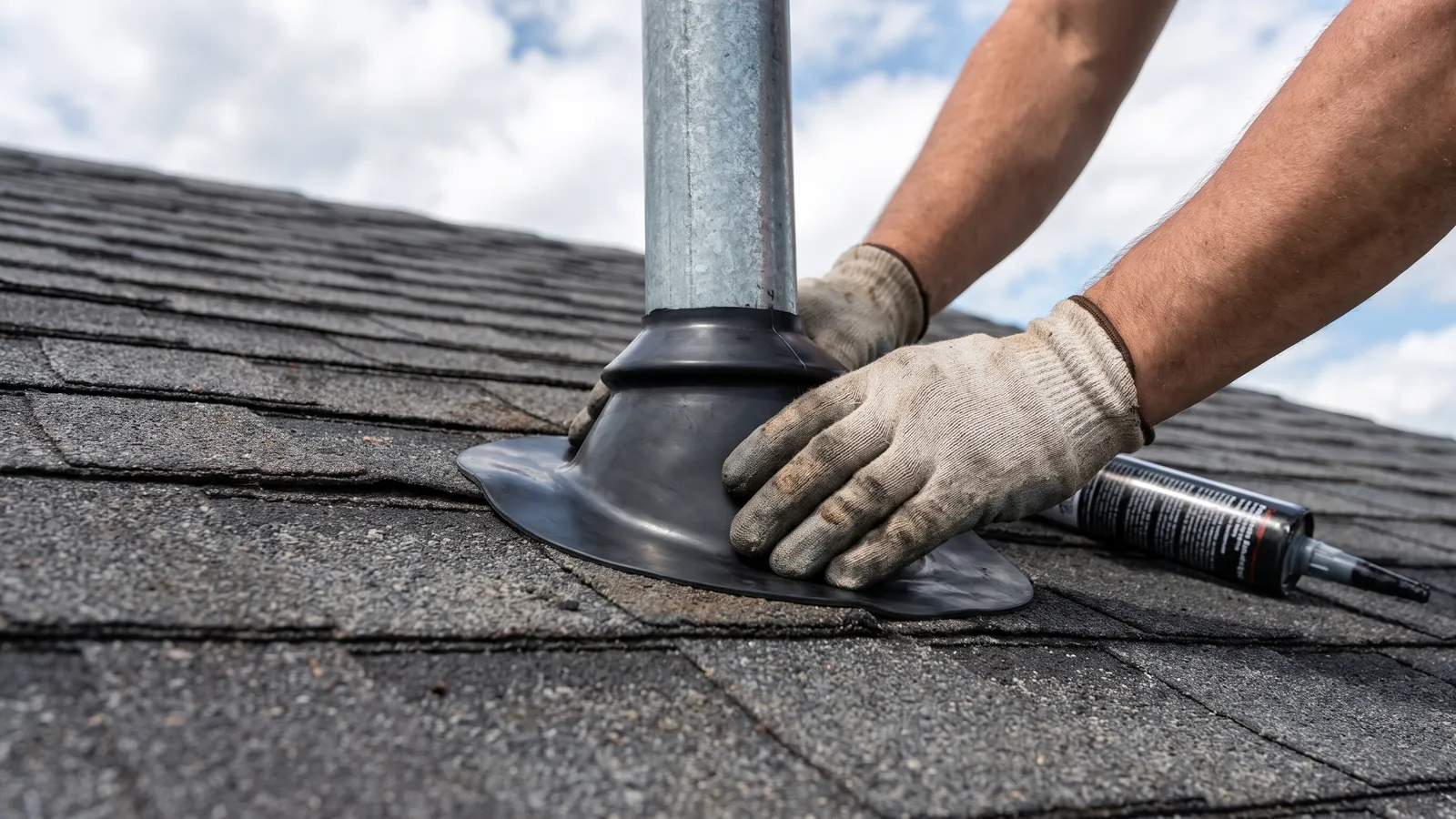
Pipe boots & vents
Cracked rubber collars come off and new boots go on. By a long way, this is the leak we see most in Ada County, since the high-desert sun bakes that rubber in ten to twelve years.
Step & counter flashing
We replace it rather than caulk it, along walls, dormers and chimney chases, and weave it into the shingle rows the way it ought to have gone in to begin with.
Valleys & decking
A cracked valley gets rebuilt on top of ice barrier and fresh metal, and any soft OSB is cut out and swapped for new.
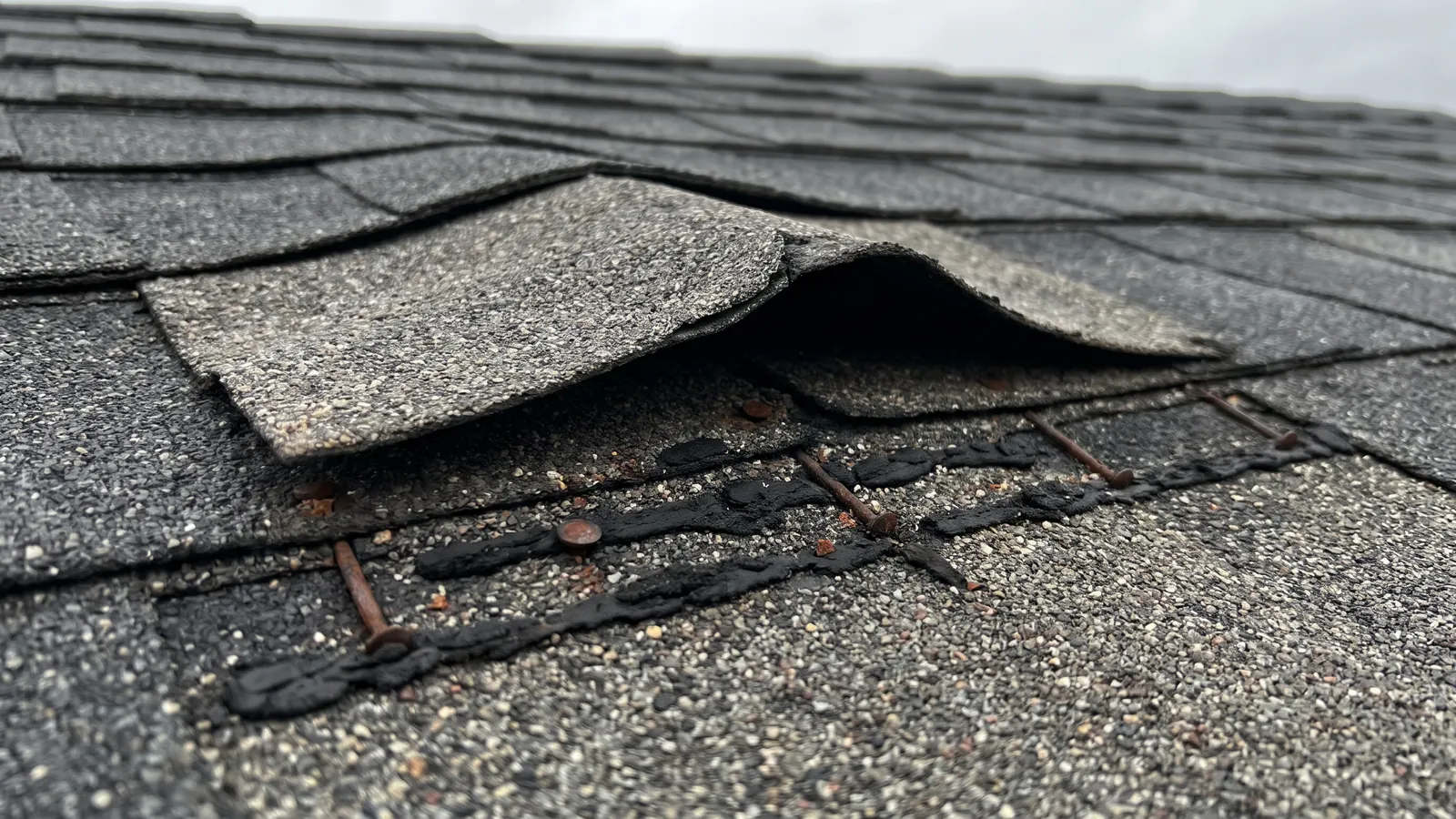
Wind & hail damage
Shingles that are creased, lifted or bruised get replaced and sealed by hand. If a storm passed over your house, we'll set up a separate storm inspection too.
Pictures the same evening
You'll get shots of the cause, the repair while it's underway, and the finished job that night, which comes in handy if a claim ever enters the picture.
What roof repairs usually run in Meridian
| Job | Typical price | Notes |
|---|---|---|
| New pipe boot or vent flashing | $250 – $500 | Covers most leaks with one entry point |
| Step or counter flashing along one wall or one side of a chimney | $450 – $1,100 | New metal, no caulk |
| Wind-damaged shingles on one slope | $400 – $1,400 | Each course sealed by hand |
| Rebuilding a valley over ice barrier | $650 – $1,600 | For each valley |
| Swapping out soft decking | $90 – $140 per sheet | The covering on top is extra |
| Ice-dam leak fix with ice barrier at the eave | $800 – $2,200 | For each eave; more on ice dams |
We share these 2026 Treasure Valley ranges so you can plan ahead. The written price you get from us lists every line, from tear-off and decking to underlayment, ice barrier, flashing, vents, disposal and the permit, and it's good for 30 days.
Recent work
Questions we get about roof repair
My roof only leaks during storms. Can you still find it?
Most of the time, yes. Plenty of leaks around Meridian only show up when rain blows sideways or when snow melts off in January, and either way the attic gives it away: the staining on the rafters and on the bottom of the deck leads us to where water's getting in. If it won't show itself while things are dry, we run a hose over one slope at a time until it does, and a second visit to look won't cost you anything.
Does it make sense to fix a roof that's 20 years old?
It depends on the roof. If one boot or one strip of flashing failed and the rest is in good shape, that's a $300 repair that gets you years more. If it's a brittle three-tab roof from 2005 shedding granules on every slope, we'll have a different talk. Either way we'll be honest with you about which one you've got, and we'll show you the photos so you can judge for yourself.
Will the new shingles match the rest of my roof?
We'll find the nearest color and profile still being made. If your roof's more than a few years old, you'll notice a small difference at first, and it fades as the new shingles weather over a season. When there's a claim involved, Idaho insurers make the call on matching one case at a time, and we document it whichever way it goes.
Can you do repairs in winter?
We can. Once it drops under roughly 40°F, shingles turn brittle, so on cold days we seal each course by hand and do the work in the warmest stretch of the afternoon. If you've got an emergency leak, it gets a solid temporary fix right away, and the permanent repair happens during the next run of decent weather.
Is a permit needed for a repair?
Not when the repair leaves the roof covering in place. If we're replacing the covering on an entire slope or on the whole roof, that needs a permit through Meridian's Citizens Portal, and we take care of it for you.